
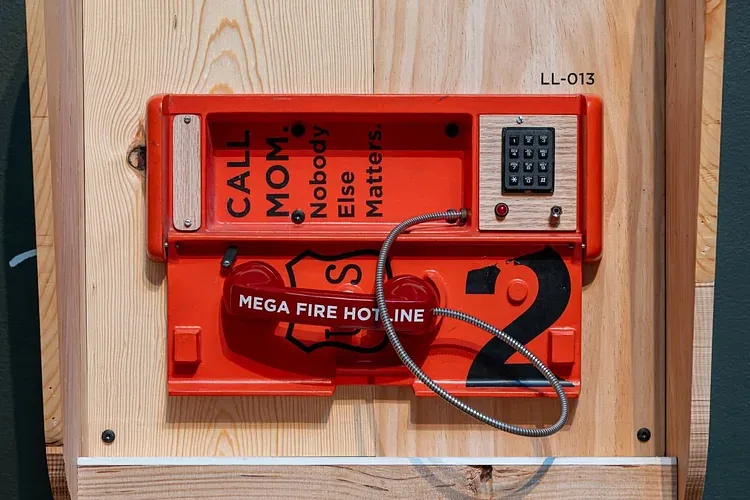
In August, the Oregon Cultural Trust announced a record funding of $4.5 million to more than 450 organizations across the state, thanks to the donations from passionate Oregonians. One of those organizations was the World Forestry Center in Portland, which received over $13k, to support a groundbreaking multimedia pop-culture art installation called Lookout Landscape.
Featuring the historic wildfire forest lookout towers of the Pacific Northwest, the latest work from Oregon-based interdisciplinary creator/educator David Buckley Borden and his collaborative team of scientists, artists, and designers, including students, will run from October 2026 – March 2027 in the World Forestry Center's Discovery Museum, reaching 10,000+ visitors. This isn't the first exhibit to come from the Department of Landscape Architecture's Associate Research Professor David Buckley Borden, as more than six years of exhibitions and work lay the foundation for the next project. For this year's participating students, Zora Johr and Andy Dickinson, this historic work is appreciated and used to continue the success of the exhibitions.
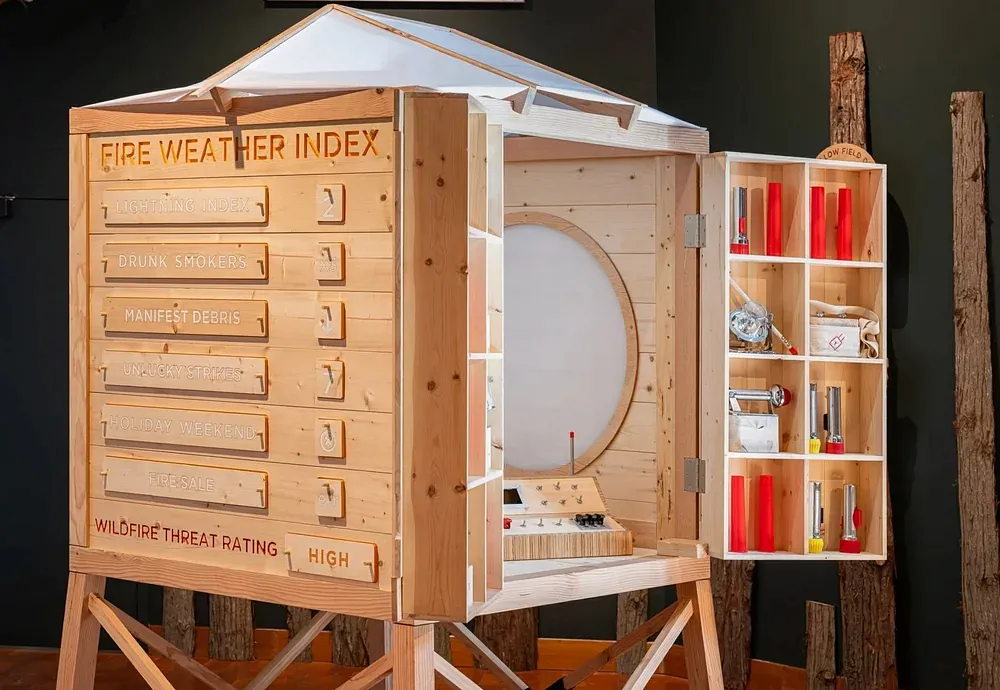
"Just the fact that we can make a show of work with things from this summer and things in it from three, four, or five years ago that still match and it looks like a cohesive show," explained Johr, LArch '27, "he found that style and solidified [the look and feel] which reinforces consistency [in the exhibitions]."
"I'd say there is a certain freedom that comes from creative constraints where you have these parameters you are working within that allow you to use bits and pieces of what people have done in the past," said Dickinson, MLA '28, "to iterate [and build] off those and see what you can layer into your own creative expression."
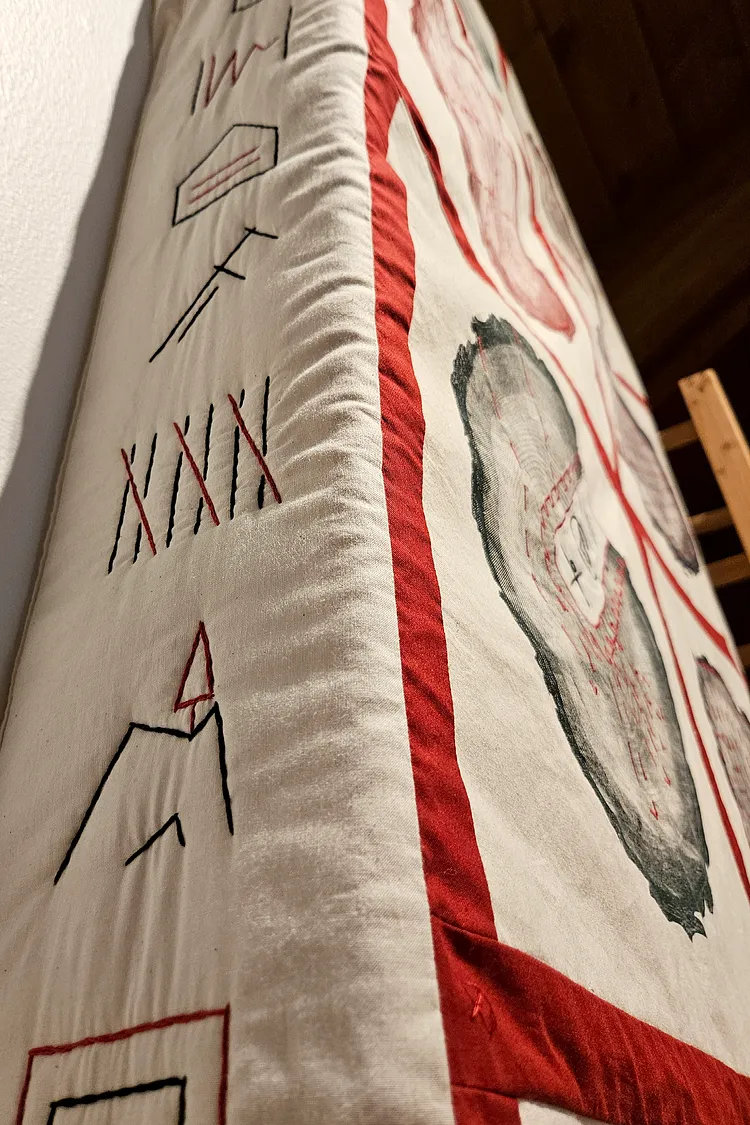
Students have been important collaborators for Borden's work throughout the years, helping fabricate, design, and research for the exhibitions, giving a novel, unique experience outside the classroom that one can only experience at a place like the College of Design, especially with the assistance of Borden's pedagogy and the Fuller Initiative for Productive Landscapes.
"As I was looking at various landscape architecture programs, what caught my eye about Oregon specifically was the Fuller [program]," explained Dickinson, "It seemed like a really interesting opportunity to put place-based practice and creative works and really get to know a space. I saw that David was [in that role] at the time, and I looked through his work. It resonated with me in terms of science, communication, and collaboration along with the various levels of creativity. When I met with him, after I became committed to the program, I was able to express my interest to work with him [and the rest is history]."
"It's definitely a two-way street, with people seeking him out and [Borden] doing the same," said Johr. "For example, at the start of summer he taught me how to build frames for small wooden signs, and I did a personal project [thanks to those skills] to make my own frame for a sign I made. And that's just the tip of the iceberg [of skills I've learned], too."
Borden, Dickinson, and Johr's work will be on display this October with the opening reception taking place on October 15 at 6:30 pm. The World Forestry Center is excited to play host for the upcoming exhibition.
“Through Borden’s signature style, the exhibition playfully redesigns forestry-based Americana artifacts, iconography, and material culture while subtly nodding to the nuances of forest management in the time of severe wildfire and climate change,” said Stephanie Stewart Bailey, Curator of Arts & Experiences at World Forestry Center.
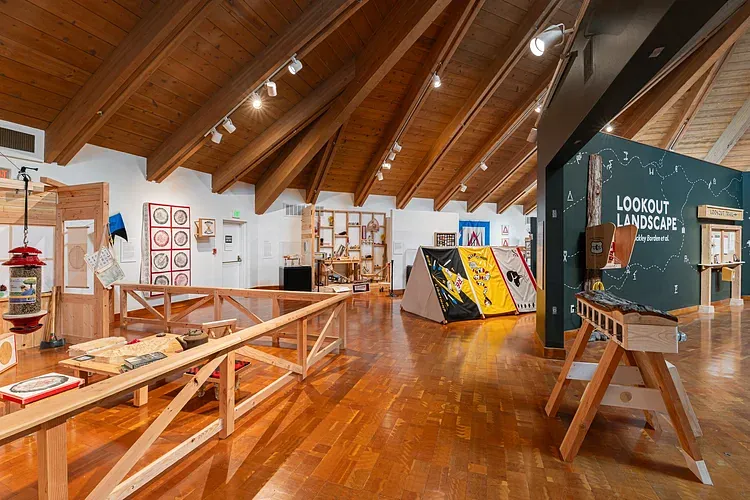
Borden's 1,800 square-foot installation explores the iconic lookout tower, trail culture, and backcountry gear as a means to explore the rich (and often conflicting) relationships between the “working forests” and the people that call them home. Wildfire, and other landscape disturbances (both man-made and natural) provide a timely context for Borden’s playful, yet critical, approach to environmental understanding.
“I've learned much about the complex ecology and cultural values at play in the forests of Oregon as I developed this place-based work over the last 6 years,” said Borden. “I hope Lookout Landscape challenges folks, as it did me, to question our beliefs and assumptions in support of holistic regional landscape stewardship.”
You can join the October 15 reception for free with registration or visit the exhibition during its run through the end of March 2027.