
- Architecture is shaped by place and culture. Designing meaningful buildings requires an understanding of how the built environment interacts with history, traditions, landscapes, and urban and suburban contexts.
- Study abroad experiences immerse students in both historical and contemporary architecture while offering opportunities to learn directly from international scholars and professional practitioners.
Fulfill Professional Degree Requirements
- Intermediate-level design studios in:
- Rome or Vicenza, Italy
- Vancouver, British Columbia
- Design studio credits available through the Danish Institute for Study Abroad (DIS) in Copenhagen.
Additional International Opportunities
- Non-studio, professionally focused programs offered through other departments within the school.
- Exchange program with the University of Stuttgart.
- Independent international practicum opportunities in design firms or non-profit organizations.
- IE3 international internship program sponsored by the university.
- Transferable credit from approved international programs at other accredited U.S. architecture schools.
Undergraduate Global Engagement
- Undergraduates are encouraged to participate in university-sponsored or affiliated international programs to meet general education requirements.
Study Visits & Global Exposure
- Beyond credit-bearing programs, students have joined department-sponsored study visits to:
- British Columbia, China, Egypt, Finland, India, Italy
- Korea, South Africa, Sweden, Tanzania, Thailand, and Turkey
Singapore
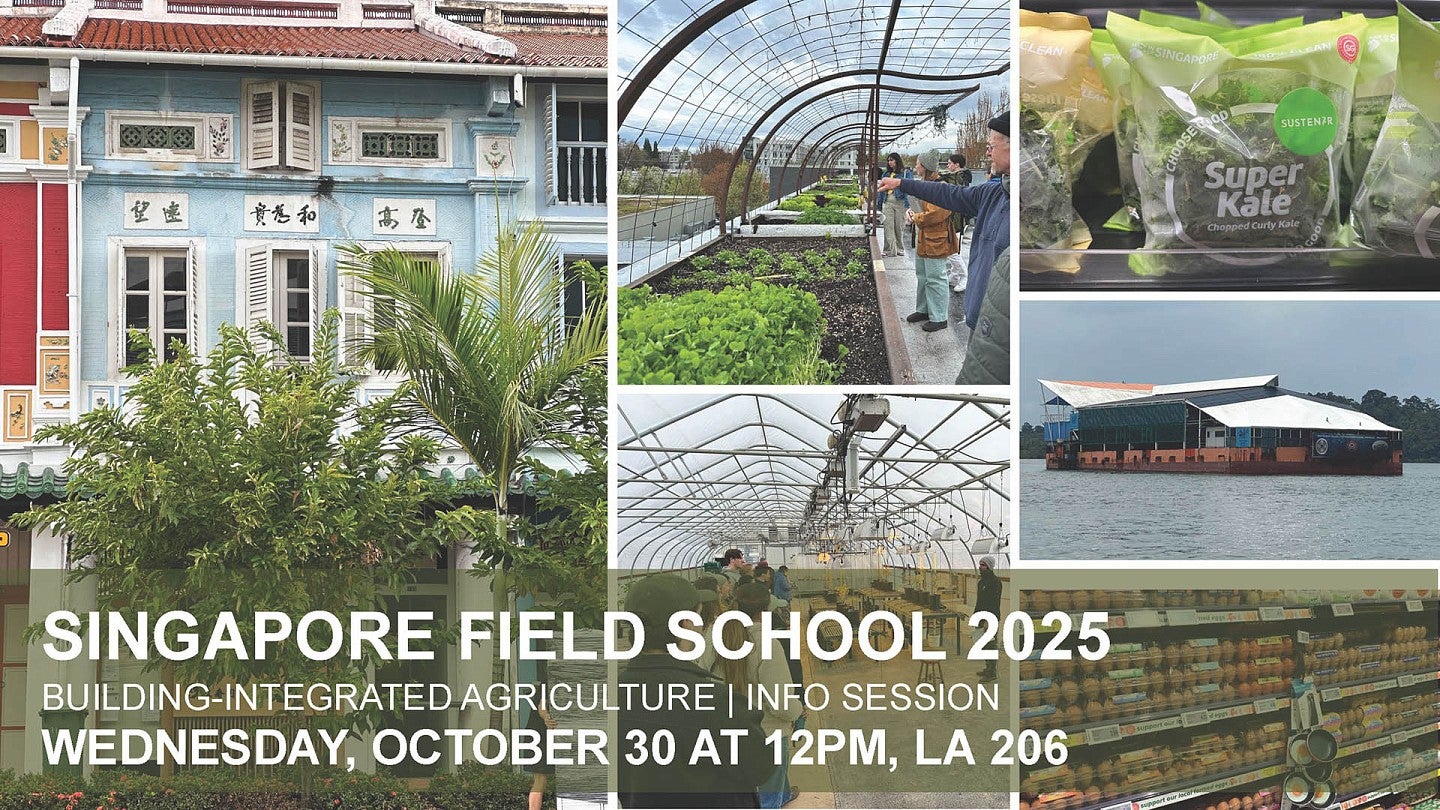
The Agriculture in the Built Environment (AgBE) Study Abroad Program is an intensive 8‑week summer program, including 4 weeks in Singapore, open to students from the University of Oregon and Oregon State University. The program offers a collaborative, interdisciplinary learning experience focused on researching and designing innovative ways to integrate architecture and agriculture within urban settings. Students enroll in a coordinated set of courses, including:
- Architectural Design Studio (ARCH 484/584, 6 credits) — M. Fretz
- Food & Architecture from Ancient to Modern Times (ARCH 407/507, 4 credits) — G. Mhuireach
- Special Topics: Building Integrated Agriculture (HORT 499, 3 credits) — G. Langellotto
The AgBE program challenges students to engage with critical global issues, including food security and equity, urban livability, human and environmental health, and strategies for climate change adaptation and mitigation.Supported by a grant from the USDA National Institute of Food and Agriculture, the program provides scholarships to every participant, with awards ranging from $1,000 to $5,000, depending on enrollment. Undergraduate and graduate students from UO Architecture, Landscape Architecture, and Environmental Design programs, as well as students from the OSU College of Agricultural Sciences, are encouraged to apply.
Barcelona, Spain
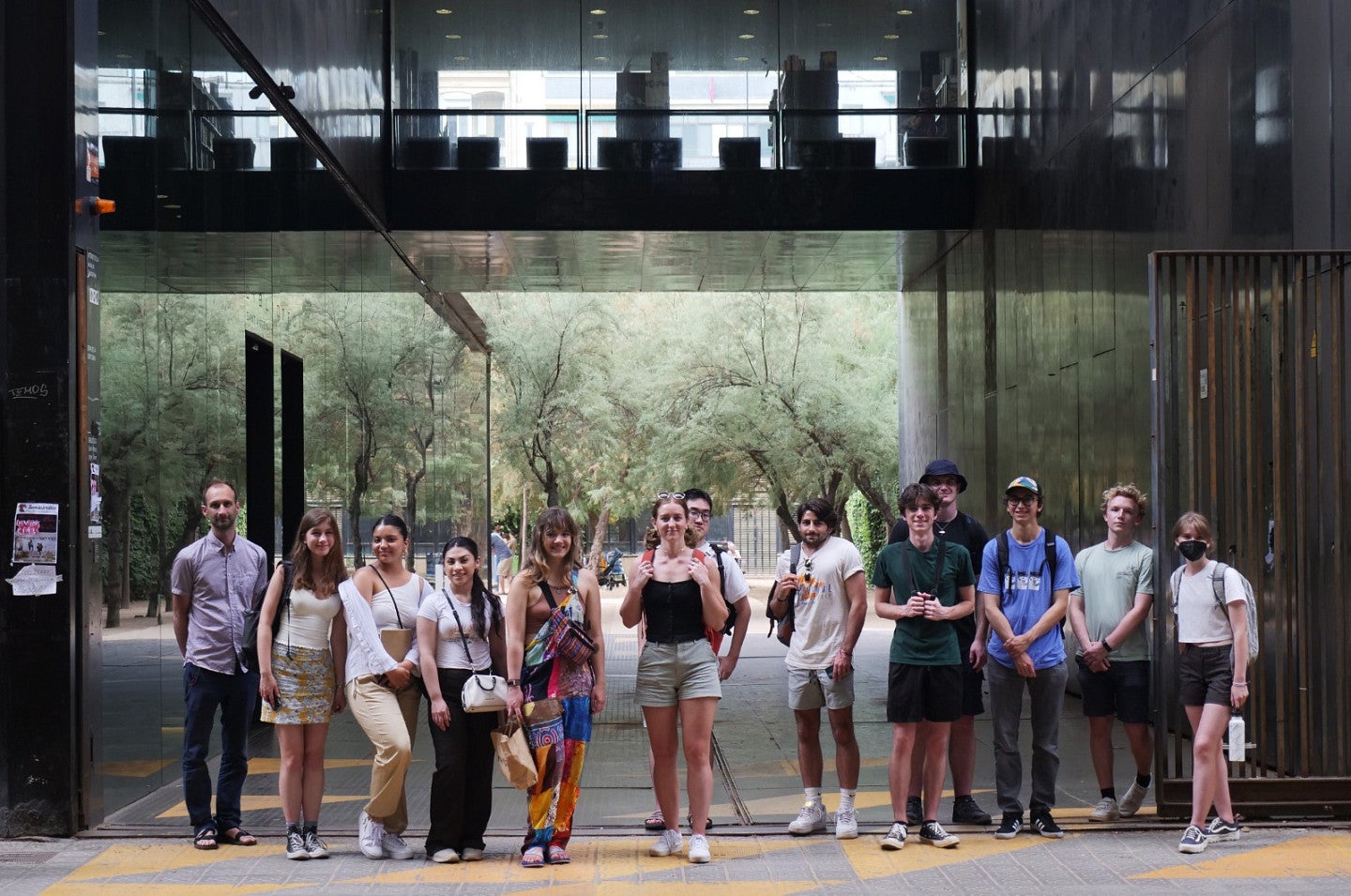
Examine how bottom-up urban design strategies create opportunities for workers and residents to participate in shaping an integrated community within Barcelona’s 22@ innovation and information activities district. The program emphasizes participatory approaches to urban design and their role in strengthening social, economic, and spatial connections.Students visit and document three urban typologies at the scales of the urban room, district, and neighborhood. These include the maritime metropolis, modernisme, and contemporary pluralism. The experience also features a comparative study of related urban typologies in Granada, Andalucía.Participants live in the pedestrian-oriented waterfront neighborhood of Poblenou, gaining firsthand experience of everyday urban life while engaging directly with the area’s social and spatial dynamics.
Vicenza, Italy
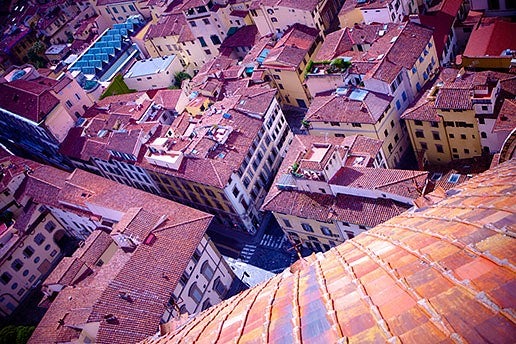
Offered during the spring term, this immersive experience provides students with first-hand exposure to Italy’s architectural, urban, and landscape traditions. Participants complete 16 professional degree credits, including a design studio and three integrated courses focused on advanced materials and construction detailing, urban design and town form, and a media course emphasizing field sketching.The term begins with a two-week introductory tour of Rome and Florence, establishing a broad historical and cultural foundation. Students then live and study in Vicenza, a UNESCO World Heritage Site in northern Italy, which serves as the primary base for coursework and studio work.Local excursions in Vicenza and nearby regional towns, along with a five-day study trip to Switzerland, extend learning beyond the studio. These experiences support hands-on engagement in the history and media courses while broadening students’ understanding of architectural practice through direct observation and travel.This opportunity is open to architecture, interior architecture, and landscape architecture students who have completed the introductory studio sequence.
Rome, Italy

University of Oregon faculty from Architecture and the History of Art and Architecture lead an immersive summer-term experience in Rome that delivers a full academic curriculum. Students complete 12 credits, including a design studio, a media course, and a seminar, all of which use Rome itself as the primary laboratory for study.In addition to coursework, guided field trips offer opportunities to explore other cities throughout Italy, deepening students’ understanding of architectural history, urban form, and cultural context through direct experience.This opportunity is open to architecture students who have successfully completed at least four design studios.
Copenhagen, Denmark
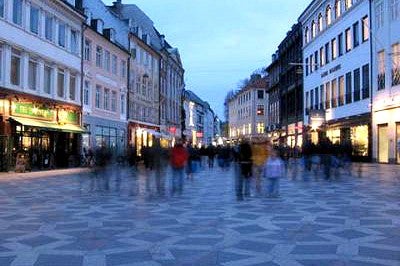
The department offers students the opportunity to study in Denmark through the Danish Institute for Study Abroad (DIS). DIS provides summer, fall, spring, and full academic year programs based in Copenhagen, with all courses taught in English.